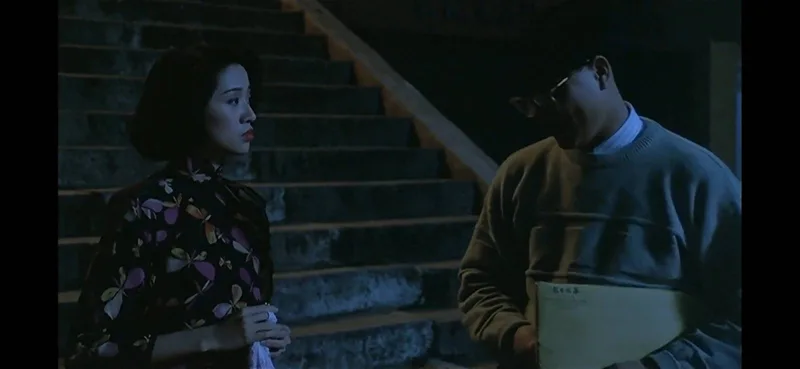

Staircases between two worlds
Sheffield’s staircases recall Rouge, where a darkly comic exchange turns “above” and “below” into a conversation between the living and the dead.
Re-imagining Hong Kong and Sheffield Through Cinema
09 / Claire Li
A weathered wall and a station clock hold the feelings of waiting, secrets and regret as the city moves around them.
Click an image to view it full size / 點選圖片放大
In their words
These two photographs connect Sheffield with Wong Kar-wai's In the Mood for Love through two objects that silently witness time: a weathered wall and a station clock.
In the film, a similar wall and window frame many encounters between the two central characters. Appearing three times, the wall holds conversations that must remain hidden. To me, it feels like a secret refuge—a place that stays still while time moves forward, people change, and possibilities disappear. The wall at Portland Works carries the same sense of endurance. Its worn surface seems to remember lives and stories that can no longer be fully recovered.
The office clock appears five times throughout the film, turning private hesitation into something measured by public time. Its final appearance accompanies the question, “If I had one more ticket, would you go with me?” In my photograph, the clock above Platform 1 at Sheffield railway station places this unspoken possibility within a setting of waiting and departure. Every train offers a route elsewhere, but not everyone leaves together.
These photographs invite the audience to consider how ordinary places can preserve intimate feelings: time moves on, yet walls and clocks remain as quiet witnesses to secrets, waiting and regret.
I'm Claire Ziman Li, and a second-year PhD researcher in East Asian Studies at the University of Sheffield. I joined C&G Artpartment as an intern in summer 2026. Originally from mainland China, I have lived and studied in the UK for several years. I have a strong interest in Hong Kong cinema, particularly the films of Wong Kar-wai. To me, Hong Kong cinema is more than a cultural product: it is also a reflection of its time and has had a significant influence on the wider cultural and creative industries.
Additional materials supplied by Claire Li. These include film references, photographic variations and process images, and are not all final exhibited works.
Sheffield’s staircases recall Rouge, where a darkly comic exchange turns “above” and “below” into a conversation between the living and the dead.

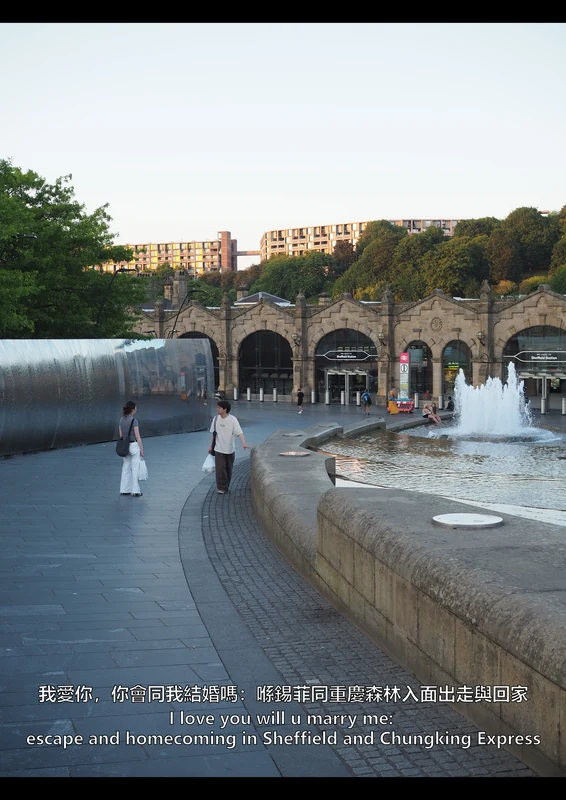
A meeting outside Sheffield Station brings Chungking Express’s dreams of departure and homecoming into a familiar city landscape.