

Home is the song you sing together
Friends, music and the everyday space of a Sheffield home connect cinema with queer identity and found family.
Re-imagining Hong Kong and Sheffield Through Cinema
07 / Nam Huh
A telephone booth becomes a fragile link across time zones, echoing the isolation and uncertainty of making a life in a new country.
Click an image to view it full size / 點選圖片放大
In their words
In Wong Kar-wai's Days of Being Wild (1990), Tide pauses beside a solitary telephone booth in the rain, waiting for a call that never comes. Recontextualising this image within my experience of moving to Sheffield, this installation reflects on the quiet isolation, bureaucratic limbo, and lingering uncertainty of building a life as a migrant in the UK. The accompanying photograph captures a worn-out phone booth at night on a deserted street - a stark contrast to the dense, round-the-clock energy of the Asian metropolises many of us leave behind. When the city shuts down early, the profound silence forces you inward. The illuminated booth becomes a symbol for the fragile, one-way lifelines we use to stay anchored across time zones while navigating the heavy stillness of visa waiting periods, job searches, and the longing to belong.
Opposite the photograph hangs an old British wall telephone. When visitors pick up the receiver, they hear a field recording created by dialing the exact number printed on the phone booth in the photo. Rather than the silence of the film, the earpiece fills with a persistent, unanswered ringing into the cold night air.
Lifting the receiver, the audience physically steps into the migrant's posture - holding a device that promises connection, only to be met with the echo of distance. Presented with cinematic subtitles in English and Chinese, the piece invites you to hold that receiver, pause in the noise, and feel the weight of listening for a home thousands of miles away.
Nam Huh is a UK-based curator and researcher working at the intersection of media art, diasporic identity, queer and postcolonial theory. Their practice explores experimental and community-driven forms of storytelling, often involving immersive technologies, sound, and socially engaged processes. They have curated exhibitions and events across the UK, South Korea, and Europe, and are currently pursuing a PhD in Communications and Media, focusing on experimental documentary films. Recent projects focus on the representation of queer and East/Southeast Asian migrant experiences through post-internet documentary and digital ecologies.
The statement describes the exhibition’s telephone sound installation. Its audio recording is not included in this online archive.
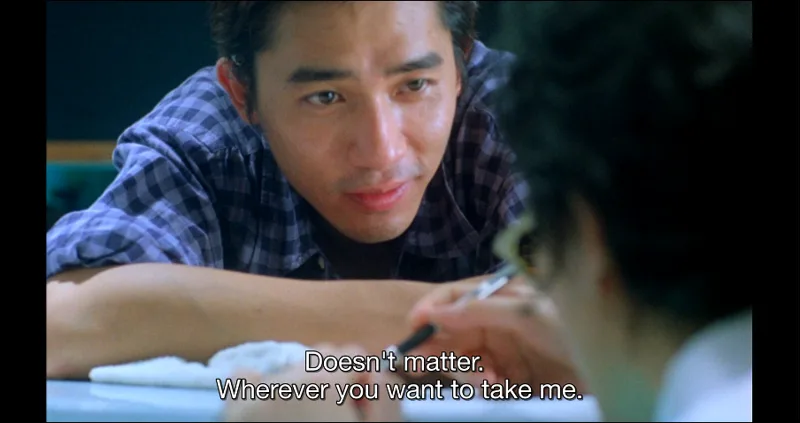
Additional materials supplied by Nam Huh. These include film references, photographic variations and process images, and are not all final exhibited works.
Friends, music and the everyday space of a Sheffield home connect cinema with queer identity and found family.
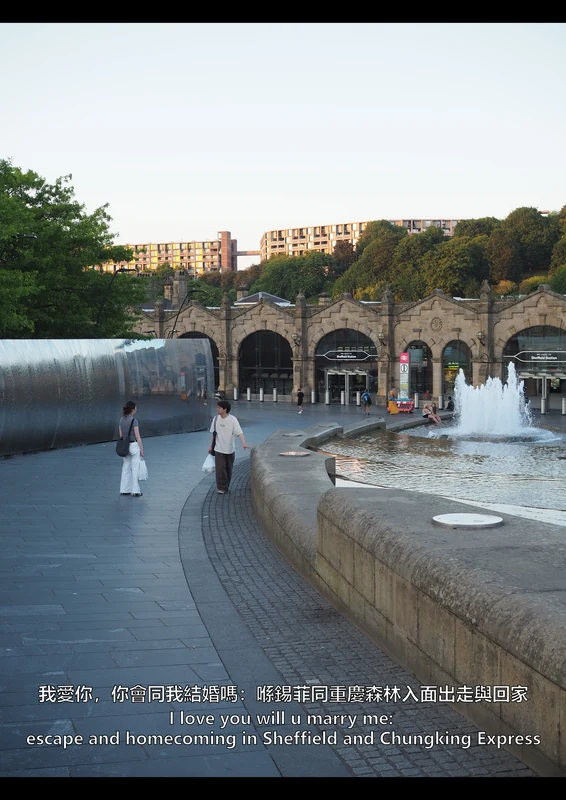
A meeting outside Sheffield Station brings Chungking Express’s dreams of departure and homecoming into a familiar city landscape.